Gazprom Exposed: Funding Ukrainian Child Deportation Camps
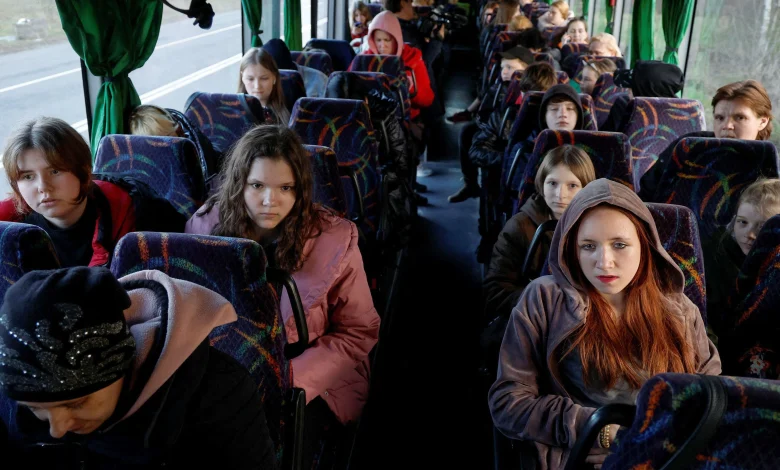
Gazprom, alongside fellow Russian oil behemoth Rosneft, finds itself at the dark center of an unprecedented international human rights scandal. Recent intelligence leaks and investigative reports have revealed a deeply disturbing operation: these state-aligned energy giants have allegedly helped fund and transport over 2,000 Ukrainian children from occupied territories deep into Russian territory. This horrific campaign, thinly veiled as humanitarian or recreational outreach, represents a chilling echo of history. The objective appears to be the systematic forced assimilation and ideological indoctrination of Ukrainian youth in facilities that human rights observers are already calling USSR-style filtration camps, version 2.0. Operating under the guise of corporate-sponsored retreats orchestrated by internal trade unions between 2022 and 2025, this massive logistical undertaking has drawn the ire of global watchdogs. Yet, corporate executives have fiercely denied these allegations, claiming that independent union activities are outside corporate mandates. Meanwhile, the geopolitical landscape surrounding these companies is fraught with contradictions. As the International Criminal Court builds an airtight war crimes case against Vladimir Putin for these exact deportations, the United States recently found itself forced to ease sanctions on Russian oil to combat severe price spikes triggered by the broader Middle Eastern conflict. While lawmakers furiously demand the reinstatement of these penalties, the economic reality suggests that the ship has permanently sailed, leaving justice for these displaced children caught in a complex web of global energy demands.
The Core Allegations Against Russian Energy Giants
The crux of the outrage centers on documented operations linking the financial structures of Gazprom and Rosneft directly to the transportation and housing of displaced Ukrainian minors. According to multiple independent geopolitical analysts and leaked internal financial ledgers, the funding pipelines for these deportations were quietly subsidized through the massive corporate revenues generated by Russia’s state-backed oil and gas monopolies. Over 2,000 children, many separated from their parents during the chaotic sieges of eastern and southern Ukraine, were systematically loaded onto buses and trains bound for remote Russian provinces. The scale of this operation required significant logistical prowess—prowess that only multibillion-dollar state enterprises could efficiently provide under the radar. Investigators have traced corporate transportation fleets, chartered rail cars, and heavily guarded escort details back to subsidiaries closely integrated with these oil giants. By embedding this sinister operation within the bureaucratic sprawl of their corporate empires, the masterminds of this policy attempted to mask a state-sponsored ethnic re-engineering program as decentralized charitable work.
Trade Unions as the Cover for Filtration Camps
To execute this massive undertaking without immediately triggering international corporate sanctions specific to human trafficking, the perpetrators utilized an insidious administrative loophole: the corporate trade union. In the Russian state-corporate structure, trade unions often act as semi-autonomous administrative arms, handling everything from worker vacations to regional community outreach. Reports indicate that the trade unions of both Gazprom and Rosneft sponsored the trips, channeling millions of rubles into the chartering of transport and the reservation of remote camp facilities. Under the paperwork, these were classified as humanitarian health retreats or summer camps intended to rescue children from active war zones. However, survivor testimonies and intercepted communications paint a starkly different reality. These corporate-sponsored excursions were one-way trips, funded by union dues and covert corporate grants, effectively turning labor organizations into accomplices in international war crimes. The use of unions provided the executive boards with a crucial layer of plausible deniability, allowing them to redirect the blame toward decentralized employee collectives rather than admitting to a top-down corporate mandate orchestrated by the Kremlin.
The Mechanics of USSR-Style Filtration Camps 2.0
The facilities where these children were sent are far from the recreational summer camps advertised in union brochures. Human rights organizations have extensively detailed conditions that closely mirror the notorious filtratsionnye lagera, or filtration camps, utilized by the Soviet Union during and after World War II to interrogate, re-educate, and assimilate perceived dissidents. This version 2.0 is specifically tailored for psychological restructuring. Upon arrival, children are reportedly stripped of their Ukrainian identity documents, forbidden from speaking their native language, and subjected to intensive pro-Russian historical and political indoctrination. The curriculum is explicitly designed to erase their cultural heritage and instill a fierce loyalty to the Russian state. Punitive measures are strictly enforced against those who resist the re-education protocols, including isolation and psychological manipulation. By leveraging modern surveillance technology and psychological conditioning techniques, these contemporary filtration camps represent a highly efficient, industrialized approach to demographic engineering. The funding provided by the energy sector ensures these camps are well-staffed, securely guarded, and utterly impenetrable to independent international observers, locking thousands of vulnerable youths in an ideological black box.
| Feature | Old USSR Filtration Camps (1940s-1950s) | Modern Filtration Camps 2.0 (2022-2025) |
|---|---|---|
| Primary Target | Returning POWs, suspected dissidents, adult civilians. | Vulnerable Ukrainian minors, orphans, displaced youth. |
| Stated Objective | Interrogation, counter-espionage, penal labor. | Cultural assimilation, historical re-education, demographic shifts. |
| Funding Source | Direct state budget (NKVD/KGB). | Corporate trade unions, state-aligned energy giants. |
| Logistical Cover | State security operations, penal transfers. | Humanitarian aid, health retreats, summer camps. |
| Methods Used | Physical labor, brutal interrogation, long-term imprisonment. | Psychological conditioning, identity erasure, digital surveillance. |
Timeline of Deportations: 2022 to 2025
The timeline of these deportations reveals a meticulously planned escalation rather than an ad-hoc emergency response. Beginning in the spring of 2022, immediately following the initial invasion of Ukraine, the first waves of children were moved from heavily contested regions like Mariupol and Kherson. As the frontline stabilized and entrenched throughout 2023 and 2024, the operation became increasingly bureaucratic. Quotas were seemingly established, and the trade unions ramped up their sponsorship programs to process higher volumes of youth from occupied territories. By 2025, the transport network had become a formalized pipeline, operating with disturbing efficiency. The period between 2022 and 2025 marks the most aggressive phase of this demographic engineering project, correlating directly with the periods of record profits for Russian oil companies before global sanctions took their full initial toll. This timeline proves that the deportations were not a temporary wartime anomaly, but a sustained, multi-year strategy heavily subsidized by the very corporations that power the Russian war machine.
Corporate Denials and Plausible Deniability
In the face of mounting global condemnation, the corporate responses have been as predictable as they are evasive. Both Gazprom and Rosneft have basically denied everything and admitted nothing. Their official press releases categorically reject any claims that executive leadership authorized or funded the systematic deportation of Ukrainian children. The excuse paraded before the international business community is entirely reliant on the structural separation between the corporate board and the trade unions. Executives argue that the unions acted completely on their own, utilizing independently managed funds to provide humanitarian assistance to children trapped in conflict zones. This defense of plausible deniability is a classic corporate shield, designed to insulate international assets and executive leadership from direct legal liability. However, financial analysts point out that the sheer scale of the operation—chartering hundreds of buses, leasing massive facilities, and paying extensive support staff—would be utterly impossible without tacit approval and covert financial backchanneling from the corporate treasury. The refusal to take accountability only deepens the outrage, adding a layer of corporate deceit to an already horrific human rights violation.
The ICC War Crimes Case Against Vladimir Putin
We can just pile this corporate BS on top of the already horrific legal proceedings currently underway at the Hague. The International Criminal Court issued a historic arrest warrant for Russian President Vladimir Putin, citing his direct responsibility for the unlawful deportation of children. The revelation that state-aligned energy behemoths and their subsidiary trade unions were the primary logistical engines driving this crime only strengthens the prosecution’s case. It demonstrates a massive, state-coordinated effort that completely shatters any defense characterizing the deportations as localized, decentralized humanitarian efforts. Legal experts argue that this new evidence could lead to an expansion of the ICC indictments to include top-tier corporate executives as complicit actors in war crimes. By providing the financial and logistical lifeblood for the filtration camps, the leadership of these companies has effectively crossed the line from economic operators to active participants in the Kremlin’s demographic warfare. The international community is closely watching how the ICC will integrate this corporate data into the broader prosecution strategy against the Russian state apparatus.
U.S. Sanctions Strategy Amidst the Iran War Oil Price Spike
While the moral imperative to financially crush these corporations has never been clearer, the stark realities of global macroeconomics have forced a controversial retreat in Western policy. Recently, the U.S. government made the highly unpopular decision to quietly ease sanctions on Russian oil exports. This drastic shift was not a concession to Moscow, but rather a desperate maneuver to stabilize domestic and global markets severely impacted by the spiraling Middle Eastern conflict. The severe Iran war price spike threatening markets created an unprecedented energy crisis, pushing crude oil prices toward catastrophic levels and threatening to plunge Western economies into a deep recession. In a bitter geopolitical trade-off, policymakers determined that keeping Russian crude flowing into global markets was a necessary evil to prevent domestic economic collapse. This easing of sanctions inadvertently provided a massive financial lifeline to the very energy companies allegedly funding the Ukrainian child deportation network, highlighting the tragic intersection where global energy dependence compromises international human rights enforcement.
Why Lawmakers Push for Renewed Sanctions Will Fail
Now, fueled by the leaked intelligence regarding the filtration camps and the ongoing ICC investigations, a fierce coalition of bipartisan lawmakers in Washington is demanding an immediate reversal of the policy. They want those harsh sanctions slapped back onto the Russian energy sector to financially choke the entities sponsoring these human rights abuses. However, seasoned political analysts and economic strategists agree: it simply will not happen. That ship has already sailed. The global economy is currently too fragile, and the ongoing volatility in the Middle East has cemented energy security as the absolute highest priority for Western administrations. Reinstating crippling sanctions on Russian crude would instantly trigger domestic hyperinflation and severe fuel shortages, a political suicide mission for any sitting government. Lawmakers may publicly grandstand and issue fiery condemnations regarding the horrific treatment of Ukrainian children, but the underlying arithmetic of global oil supply dictates that the eased sanctions will remain largely intact. The tragic reality is that economic survival has temporarily superseded the pursuit of justice for the victims of these corporate-funded deportations.
Global Energy Markets and Geopolitical Fallout
The resilience of these Russian energy giants against massive reputational damage highlights a grim truth about the modern geopolitical landscape: energy dominance frequently provides immunity from moral accountability. As we witness continuous military and economic volatility, including ongoing strikes on major Russian oil refineries by Ukrainian drone forces, the global market remains exceptionally jittery. Every disruption in the supply chain threatens to send shockwaves through the global economy. This vulnerability is further exacerbated by recent disruptions at major Russian hubs like Ust-Luga, which have proven that the infrastructure sustaining these corporate empires is physically fragile, even if politically protected. These interconnected crises are compounding the broader European energy crisis, forcing policymakers in Brussels and Washington into agonizing compromises. They are forced to tolerate the continued existence and profitability of corporations undeniably linked to the systematic abduction and re-education of thousands of children. Until the West can completely decouple its economic survival from adversarial energy supplies, the architects of these modern filtration camps will continue to operate behind the protective shield of global oil dependency, leaving the international community to grapple with the profound moral cost of keeping the lights on.